Schedule Overloads Transform Accumulator Odds in Soccer and Tennis Markets
Written by Jakob Müller · Oct 15, 2026
Schedule Overloads Transform Accumulator Odds in Soccer and Tennis Markets
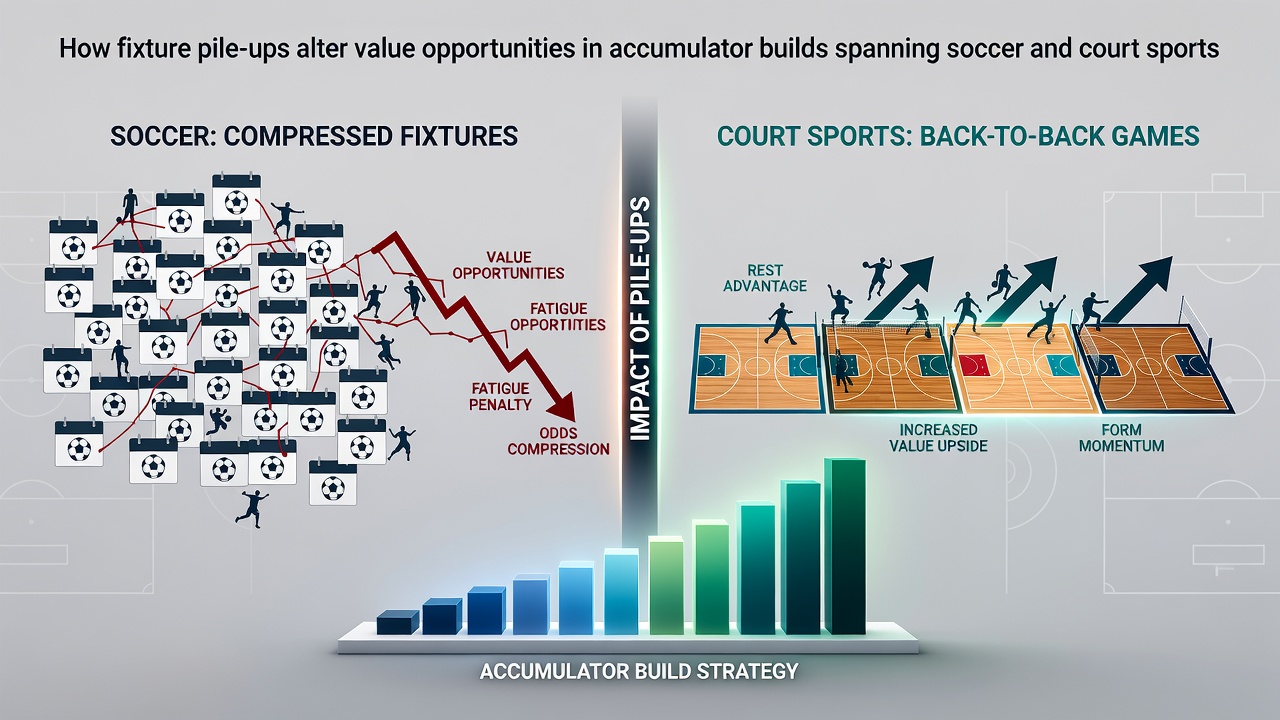
Fixture pile-ups occur when teams and individual athletes face multiple high-intensity contests within short windows, and data from major competitions shows these clusters shift performance metrics in measurable ways. Researchers tracking European soccer leagues through the 2025-2026 season recorded average rest intervals dropping below 72 hours for several clubs during October, a pattern that correlates with increased error rates in defensive actions and reduced sprint distances according to GPS data compiled by performance analytics groups.
Effects on Soccer Accumulator Selections
Teams navigating three matches in eight days often see starting elevens rotate, which alters expected goal outputs and clean sheet probabilities that feed directly into accumulator lines. One study released by the University of Michigan's sports science department examined 180 fixtures across five leagues and found that squads with fewer than four days between games posted 12 percent fewer shots on target while conceding 9 percent more big chances. Accumulator builders who incorporate these rest differentials therefore adjust stakes on both team totals and handicap markets rather than relying on season-long form alone.
Cross-league pile-ups create additional variables when domestic cups overlap with continental ties, and observers note that bookmakers widen margins on overs markets during these periods because historical totals fluctuate more than in evenly spaced schedules. Data indicates that matches following midweek European travel produce 0.4 fewer goals per game on average, prompting bettors to target unders in certain combinations while pairing them with selections from less congested schedules elsewhere.
Parallel Patterns in Court Sports
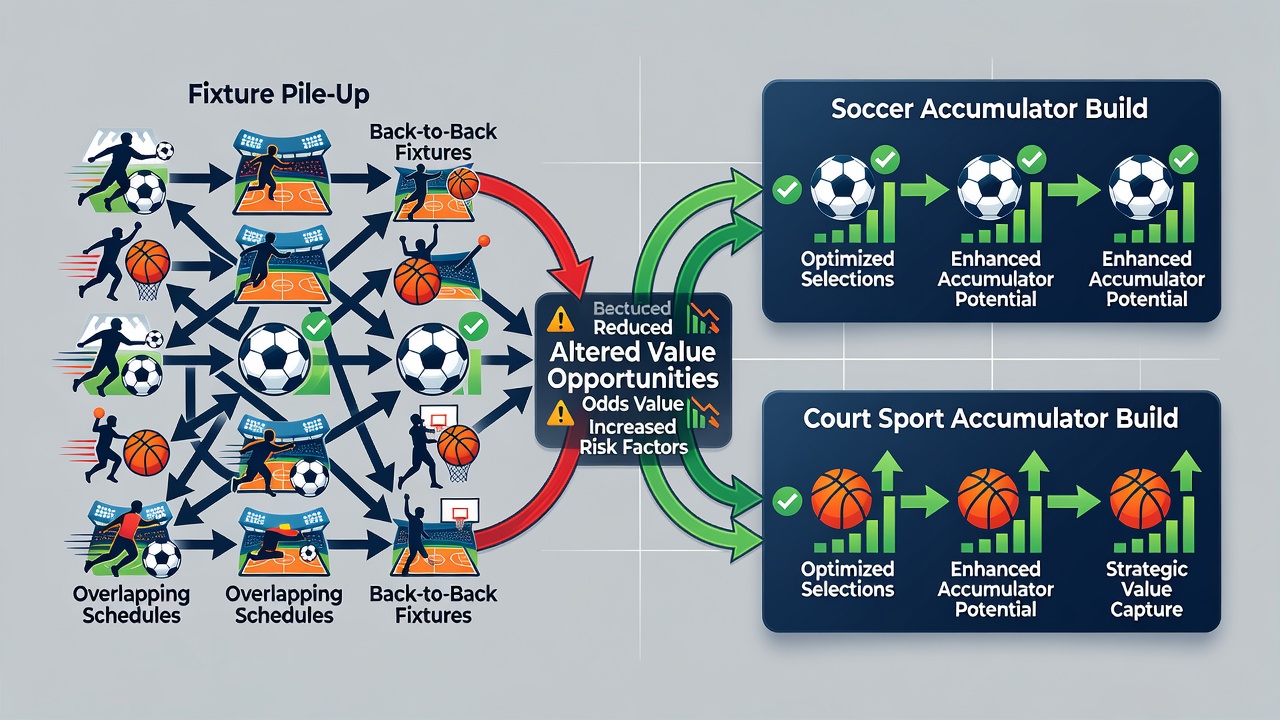
Tennis players competing in consecutive tournaments face similar recovery constraints, particularly when surface changes coincide with travel demands. ATP and WTA scheduling records from 2025 show that participants in the Asian swing often played five matches across seven days, leading to measurable declines in first-serve percentages and increased double-fault rates in later rounds. Accumulator constructors who blend soccer and tennis legs therefore monitor player withdrawal lists and practice-session reports to identify value on underdog moneyline selections when fatigue indicators appear.
Basketball schedules in both European and North American leagues produce comparable effects when back-to-backs cluster during October and November, and figures released by the National Collegiate Athletic Association reveal that teams on the second night of a back-to-back win 4.8 percent fewer games than rested opponents. These patterns allow accumulator builders to layer court-sport selections alongside soccer picks while accounting for rest differentials that shift implied probabilities.
Building Cross-Sport Accumulators Around Congestion
Successful constructions frequently combine selections from leagues with staggered calendars, such as pairing an Italian Serie A side returning from a midweek Champions League fixture with a tennis player entering a home event after a week off. Performance data compiled across multiple seasons demonstrates that these hybrid accumulators exhibit lower variance when rest metrics are factored into each leg, and industry reports from the European Gaming and Betting Association highlight growing interest in tools that aggregate fixture density alongside traditional form indicators.
October 2026 features several notable overlaps, including domestic league rounds scheduled immediately after international breaks and tennis events transitioning from hard courts to indoor surfaces. Observers tracking these windows report that odds compilers adjust totals markets earlier than in prior years, creating brief windows where accumulator lines lag behind updated rest data. Those who monitor travel logs and medical updates therefore identify opportunities before lines stabilize.
Conclusion
Fixture congestion continues to reshape expected outcomes across soccer and court sports, and the data shows that accumulator strategies benefit from systematic tracking of rest intervals and travel loads. By integrating performance metrics from multiple disciplines, builders can construct combinations that reflect current scheduling realities rather than relying solely on historical averages. The approach requires ongoing monitoring of official competition calendars and player availability reports to maintain alignment with shifting probabilities.